I find Easter a bit confusing.
Christ’s resurrection to life eternal is for many, a leap of faith too far, most notably the Jews with their traditional Old Testament God (that’s a rather simplistic reference). And though the crosses on the buns are obviously symbolic, the eggs and rabbits point to earlier pagan celebrations of Spring’s fecundity, rather than some miraculous victory over death. So Easter celebrates the return of life following Persephone’s sojourn with Hades. Winter, Spring, Summer, Autumn, birth, growth, decay, death, the enduring cycle that gives our lives context and perspective.
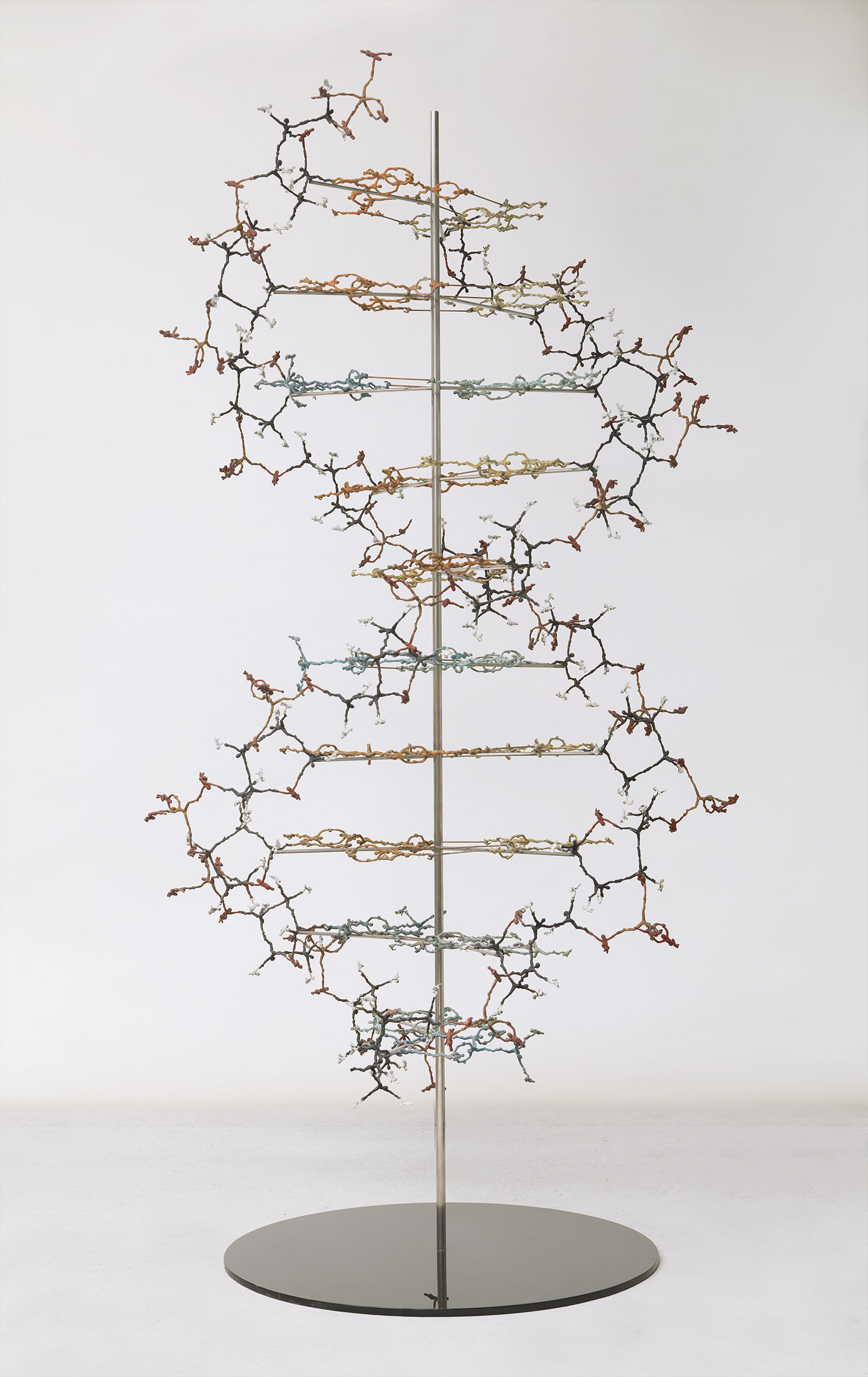
Some would argue our purpose is to simply pass on our genes, to hand over the unbroken chain of information exchange that connects us to both the first self replicating molecule and our future. But that materialistic, Darwinian view of life doesn’t necessarily capture the whole picture, or account for the irony of intelligence, our most effective adaptation for survival, also posing the greatest threat to our survival. And besides, it has nothing to say about narrative, and the subjective, self conscious perspective we bring to the universe.
In 2004 the Indian Government gave a statue of the dancing Shiva to CERN, the European Centre for Nuclear Research. Why Shiva?, well in Hinduism he dances two forms Lasya and Tandava, which respectively celebrate creation and destruction. As at Cern, Shiva’s usually depicted with one leg raised, poised to stamp down and annihilate creation, whilst the other steps on and subdues Apasmara or Muyalaka, the demon of ignorance and evil, it’s heady stuff.
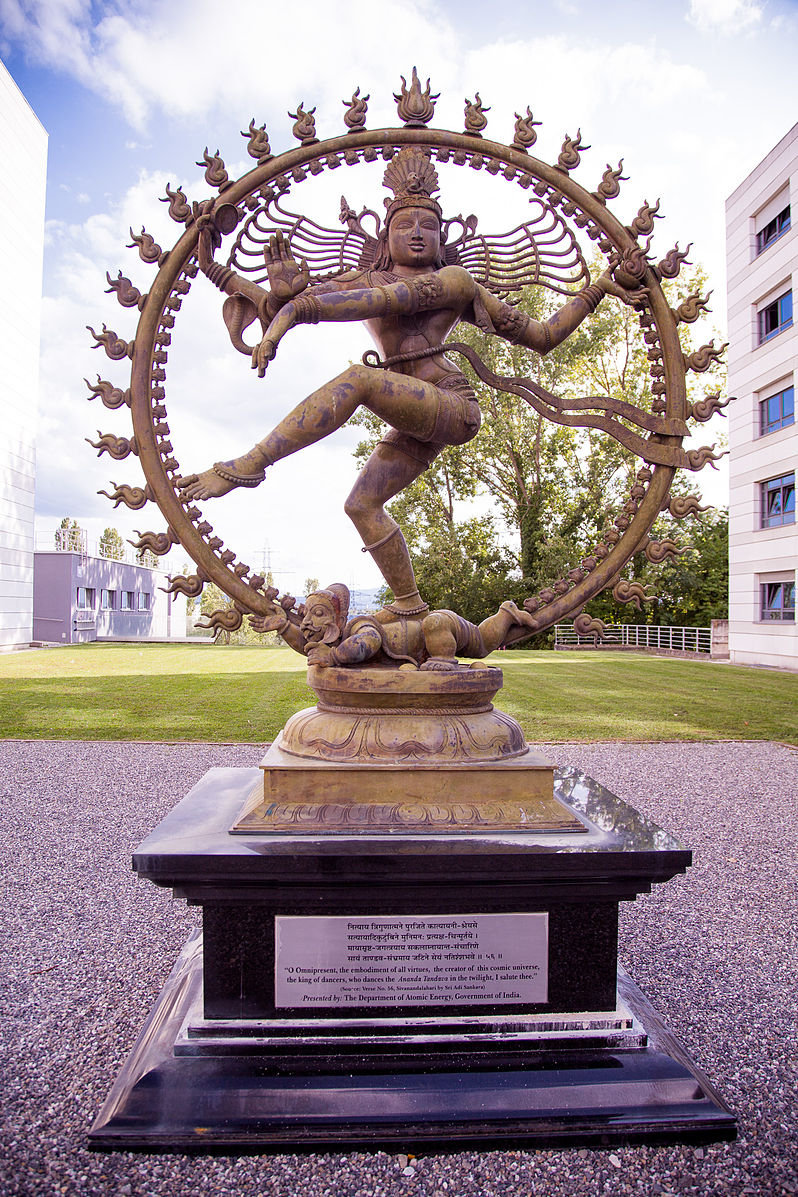
Another purpose of Shiva’s dance is to release souls from the snare of ignorance and illusion. You can see how it was an apt choice for CERN’s mission of uncovering the fundamental nature of reality by smashing it to bits in its Large Hadron Collider.
Subduing Apasmara, and extending the frontiers of our understanding requires effort, so isn’t it inevitable that in a few hundred years what we now believe will seem as preposterous as some of the beliefs our ancestors held? It wasn’t so long ago that people lodged children’s shoes up chimneys to ward off witches.
Rather than argue a particular doctrine or belief, I think it makes sense to take a more eclectic approach. One where religion and science both contribute different but meaningful perspectives. Of course rationalism, scepticism and empiricism are useful, as are faith, irony, and an open mind. And though the former are grounded in provable evidence, is provability the only measure of value and utility?
Here’s something to twist the noodle –
According to String theory there are many universes (multiverses) that are regularly created and annihilated (maybe in time to the beat of Shiva’s stamping foot). These multiverses might be thought of as something like the surface of an expanding bubbles (for which there is some evidence). As a “bubble” comes into existence it grows and as it expands another forms inside it and so on. It’s a beautiful idea: endless, inflating, nested realities. Going further down the rabbit hole, string theory also suggests/requires 8-12 other dimensions besides the four we’re familiar with, the first of which being the single dimension of a string.

Few can grasp the insights into physics and cosmology gained during the early years of the twentieth century, let alone those of the last hundred. We’re probably not smart enough to realise how dumb we are. That’s why I like stories, they’re more accessible than equations and their message is easier to grasp. A romantic thought is that they might constitute the “missing” dark matter in our universe?
Namaste
Your theory that the sun is the centre of the solar system, and the earth is a ball which rotates around it has a very convincing ring to it, Mr. James, but it’s wrong. I’ve got a better theory,” said the little old lady.
Anon
“And what is that, madam?” inquired James politely.
“That we live on a crust of earth which is on the back of a giant turtle.”
Not wishing to demolish this absurd little theory by bringing to bear the masses of scientific evidence he had at his command, James decided to gently dissuade his opponent by making her see some of the inadequacies of her position.
“If your theory is correct, madam,” he asked, “what does this turtle stand on?”
“You’re a very clever man, Mr. James, and that’s a very good question,” replied the little old lady, “but I have an answer to it. And it is this: the first turtle stands on the back of a second, far larger, turtle, who stands directly under him.”
“But what does this second turtle stand on?” persisted James patiently.
To this the little old lady crowed triumphantly. “It’s no use , Mr. James — it’s turtles all the way down.”


 Something about boys
Pingback: Rain, adventure and disparate references | Something about boys