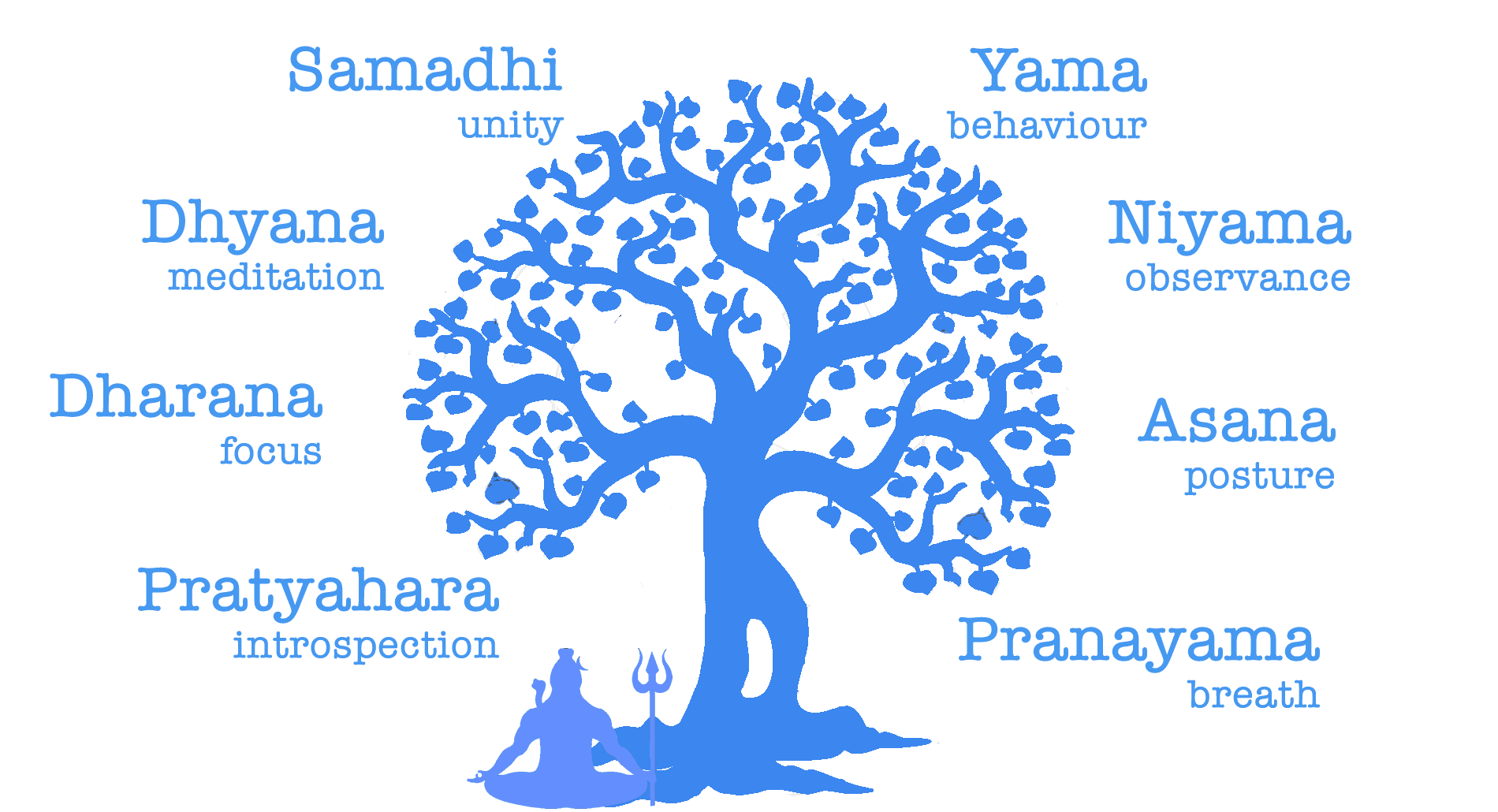
The eight limbs of yoga (Ashtanga) outline a holistic guide for the body, mind, and spirit toward attaining a state of meditative consciousness close to the divine. From its traceable, pre-vedic origins in the first millennium BCE, through Patanjali’s seminal sutras, the emergence of Hatha yoga, and latterly, the work of Swami Vivekananda and Krishnamacharya that brought the practice to Western audiences, the guide itself has evolved alongside its practitioners, their circumstances and cultures.
In the mid twentieth century, Krishnamacharya pioneered the transitions between asanas that allowed sequences to flow. This dynamic, flowing style – the foundation of modern Vinyassa – is now the main form and most often practiced in Western classes. In contrast, Yin Yoga which emerged from California in the late 1970s, is more static and rooted in physiology and Taoism. This post explores the origins and features of Yin Yoga.
As ever, thanks to my yoga teachers Ruth, Chris and Jo.
The eight limbs of ashtanga yoga
The Roots of Yin Yoga
Paulie Zink practised monkey style kung fu in the 70s and was inspired to bring dynamic, animalistic movements into yoga asanas not least to promote the balance and circulation of Qi (Chi). Exploring the interplay between static and dynamic postures, he developed a fusion of Qigong, kung fu, and Haṭha Yoga which he called Taoist Yoga (or Heaven and Earth Yoga)
The most important thing to me is not a static posture, but the essence of the posture. If you are in a posture of an animal or an element and you are not embodying the energetics of that particular posture then you are in a dead or inanimate pose.
But if you are in it with the ability to flow with the energetic quality of one of the elements or animals that is what it is for. It has got a purpose. It is like having musical notes written on a board, and you can see them. What use is it really if you are not going to use them as part of a song?
Once it is put together and you are flowing with it, that’s what it’s about. The postures themselves are the least important. What is the most important is developing the unseen, the spirit that infuses the transitions and the flow of postures. Because that is what they are meant for, so you can move naturally like an animal or an element. Paulie Zink founder of Taoist (Yin) Yoga
The spiritual philosophy is there for those who want to learn it. It comes from the Chinese Taoist philosophy that is Earth-honouring and feminine-based. It’s about remembering our wholeness by returning to the source of our being and realizing our interconnection with The Great Mother, and with the Earth and all of life. The Tao means “the way” – that is, the way of nature. It (Yin yoga) teaches stillness, and from the stillness comes movement… Paulie Zink
The Physiology of Stillness
One of Zink’s students, Paul Grilley, had the insight to combine the floor postures of Taoist Yoga with his knowledge of anatomy and physiology. Unlike the dynamic Vinyasa style, Grilley’s core idea was that by using, rather than opposing, gravity and maintaining postures for three to five minutes, muscles remain relaxed, allowing the stretch to access deeper connective tissues such as the fascia (muscle sheath), ligaments, and joint capsules. Grilley pioneered slow, passive postures focused on the core to also stimulate the flow of Qi (from the Taoist system) or Prana (from the yogic system) circulating in the energy channels around the hips and pelvis. Hence the asanas of Yin Yoga are generally a subset of those found in Hatha Yoga and floor based. They also often have a different emphasis and names e.g. Shoelace Pose is a passive form of the traditional Cow Face Pose (Gomukhasana) that avoids spinal lengthening and enhances hip compression.
Naming
Sarah Powers, a contemporary of Grilley, coined the name Yin Yoga as a counterpoint to the flowing asanas, with one of the primary objectives being to cultivate stillness and a meditative state. I can relate to that; at the top and bottom of the breath the pause can seem to stretch to eternity.


 Something about boys